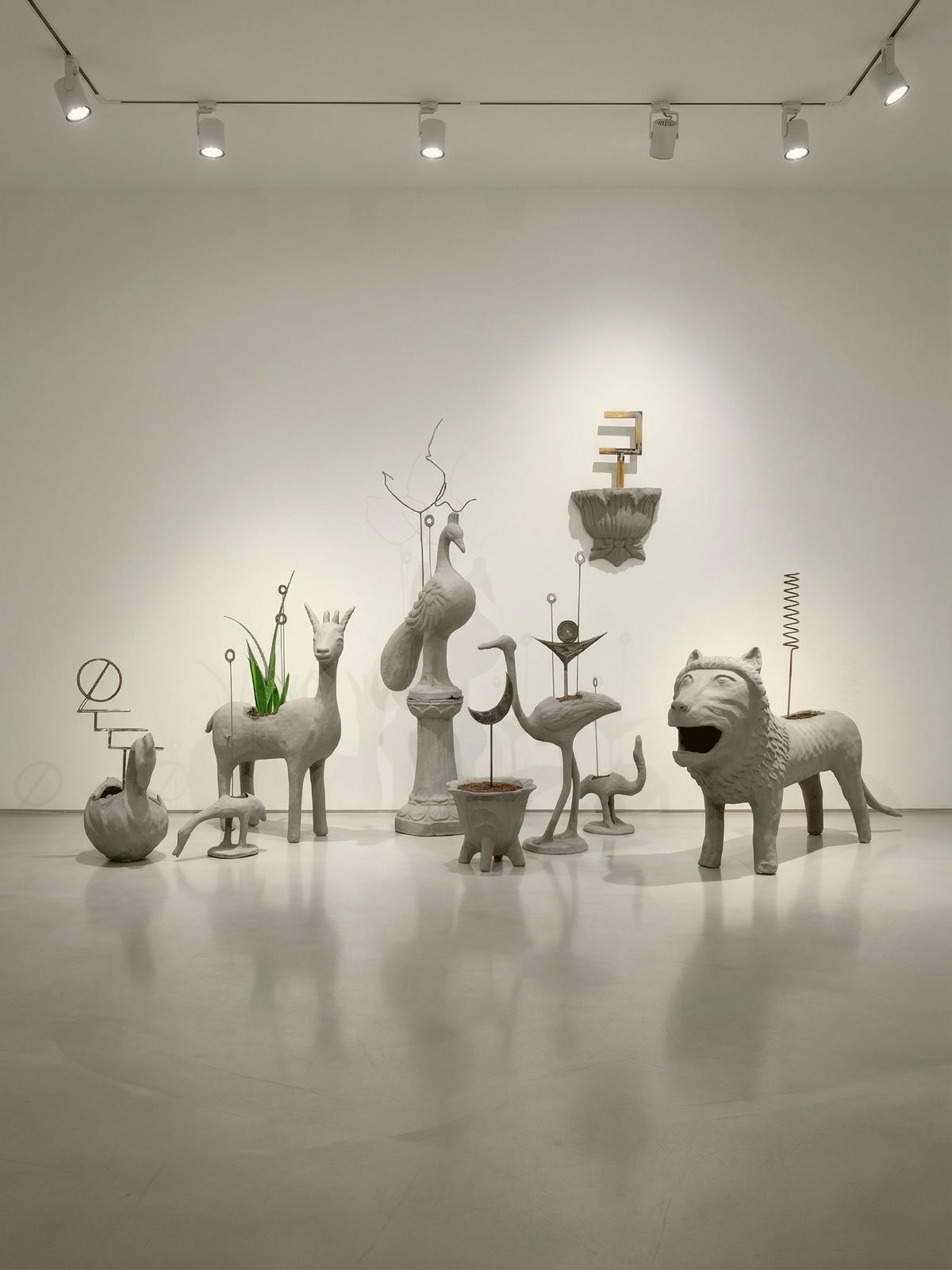
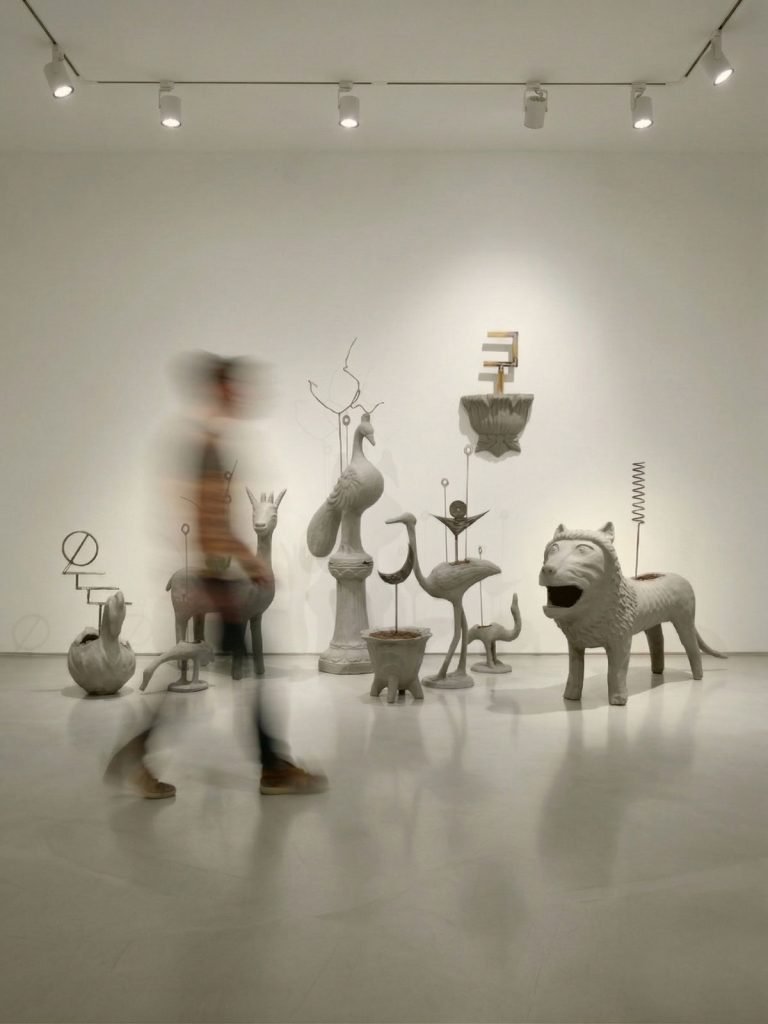
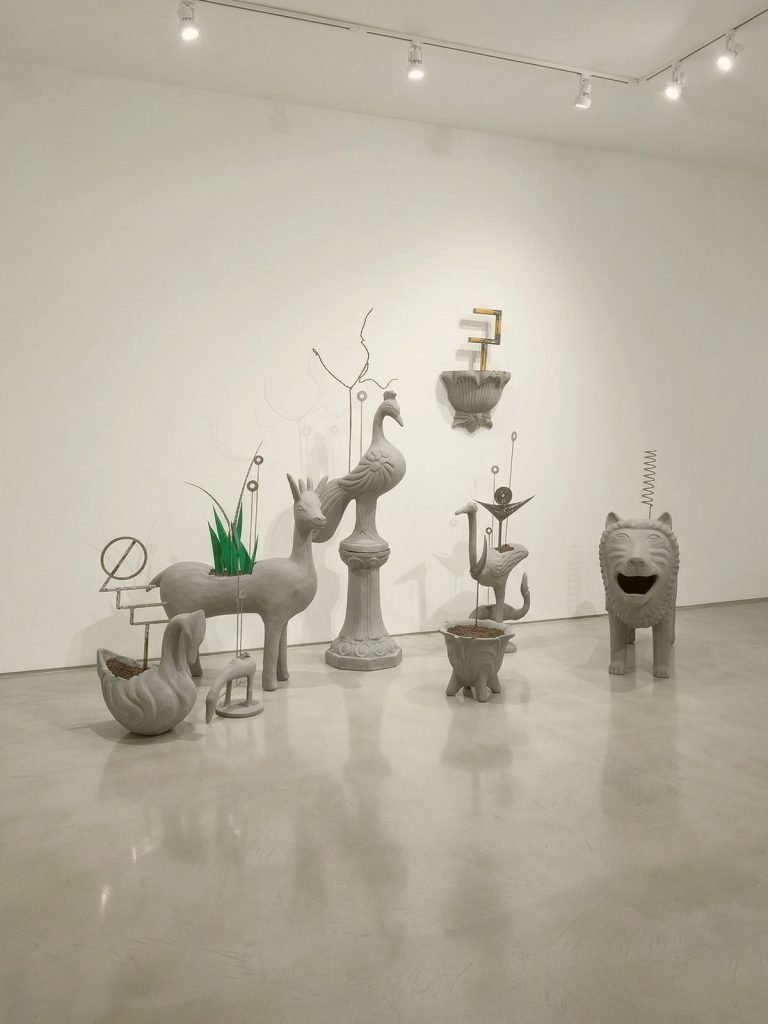
Enduring Strength emerged during a residency at a cement factory, where I became interested not in production itself, but in the silent ways an industry begins to reorganize its surroundings. I started observing how the presence of a dominant material and economic structure slowly reshapes local craft, local aesthetics, and even local symbolism. Influence, for me, became something atmospheric — something that cannot be seen immediately but can be traced through material and form.
I began collecting cement animal sculptures from the surrounding areas — lions, ducks, peacocks, and other decorative forms typically placed in gardens or outside homes. These objects exist in a space that is neither fully art nor fully design nor fully craft. They are cultural objects, shaped by availability, aspiration, and environment. What interested me was not the object itself, but the system that produced it — a cement industry that had quietly replaced other materials, and in doing so, had reshaped the visual language of the area.
Using industrial scrap and found metal from the same environment, I constructed the company’s motto, Enduring Strength, and embedded these letters into the bodies of the sculptures. The text is not applied onto the sculptures; it passes through them, constructed from the same industrial environment that produced the sculptures themselves. In this way, the industry quite literally writes its ideology onto the bodies of its surroundings.
However, the work is not only about material influence — it is also about context and permission. These objects, when placed outside in a garden, are seen as decoration or craft. When the same objects are moved into a gallery, they are reclassified as sculpture and begin to carry conceptual and cultural value. The object does not change — the context changes, and therefore the meaning changes.
My practice often operates through this act of displacement and recontextualization. I am interested in how meaning is produced not only by making things, but by moving things, reframing things, and repositioning things. I see the gallery not just as a place to show objects, but as a device that transforms how we assign value, authorship, and importance.
Enduring Strength is therefore not only a work about a factory, or about cement, or about found objects. It is a work about how power structures, industries, and institutions shape our visual world — and how simply changing the location of an object can change its entire meaning, status, and value.
Enduring Strength \ installation size variable | found objects | 2019